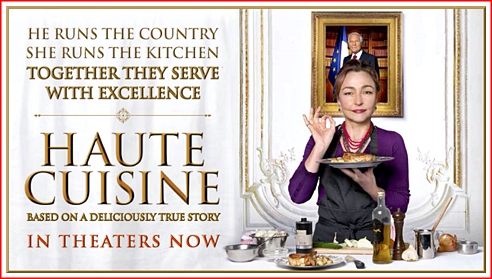
Haute Cuisine, or Les Saveurs du Palais, is a 2012 feature film based on the story of Danièle Mazet-Delpeuch‘s appointment as the first female private chef to the longest-serving President in the history of France (1981 to 1996), François Mitterrand. The plot follows Hortense Laborie (the character analogous to Mazet-Delpeuch)’s two-year tenure of the French President’s private kitchen – complete with all its triumphs, villains, tears (add drama for effect), and of course, food.
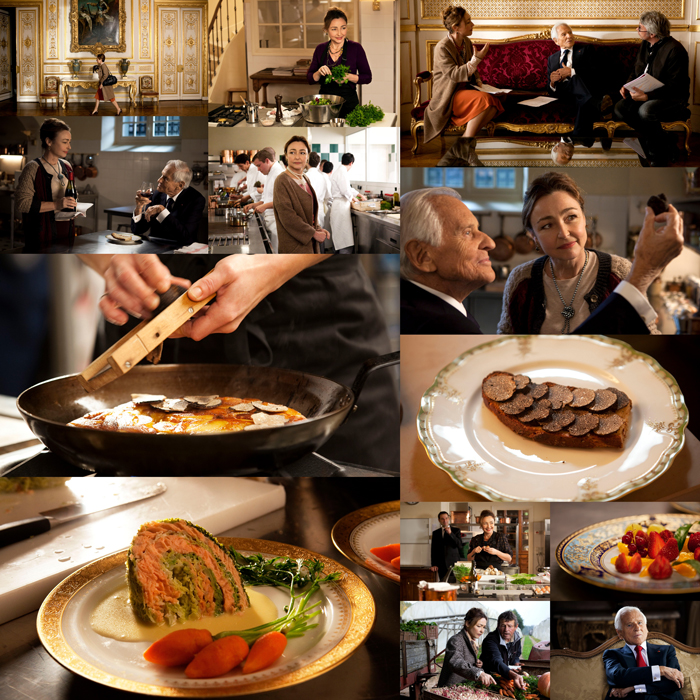
The film presents at its forefront, an exploration into the tension that exists in French cuisine. The pull towards the cutting-edge and formal against the familiar flavours of home. What is French cuisine? Is it the white-tabled 8-course degustation prepared by white-hat chefs in industrial kitchens, represented by the testosterone-dominated Main Kitchen? Or is it the laughably simple salmon-wrapped-in-cabbage and Saint Honores cake with grandmother’s cream? (Obviously though, I am biased to the salmon. Pescatarian things.) Haute Cuisine seems to suggest a certain incompatibility between the two – as seen both in the rivalry between the Main and Private Kitchens, as well as Hortense’s escape to Antarctica (the opposite end of the earth from France) following her time at Elysee. The notion of terroir is also highlighted in the regionality of Hortense’s cooking – she loves her truffles.
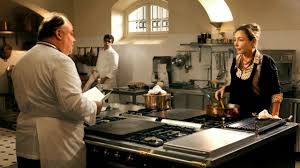
The film marks itself as a ‘foodie’ film simply in how it revolves itself around food. Specifically, French food. The characters in the film are all in some way associated with food, if not a bit obsessed with it (see President reciting an old French cookbook by heart). Honestly, if the dialogue bores you, just put the movie on mute and feast your eyes on the delectable visual descriptions of the dishes. Although, hearing the characters talk about food with such vigour in a language as romantic as French is almost just as satisfying. And just for that, I would recommend the movie to anyone who likes food. So, basically everyone.
 fish & bread * poisson et pain