Tiramisu.
What is it?
You’ll find out.
Tiramisù (pronounched tee-rah-mee-soo) means “pick me up” or “cheer me up” in Italian. And honestly, it does what it says it’ll do – at least for me, most of the time. Served cold, the main components of the dish comprise of savoiardi dipped in coffee (three cheers for caffeine!) glued together in alternating layers by a gorgeous whipped mixture of sugar, egg yolks, mascarpone cream (and sometimes cocoa). It sounds simple, but like most Italian cooking, the simplicity done well is what makes it shine. And even though I thoroughly enjoy my seafood, I would say this is a close competitor for one of my favourite European dishes of all time.
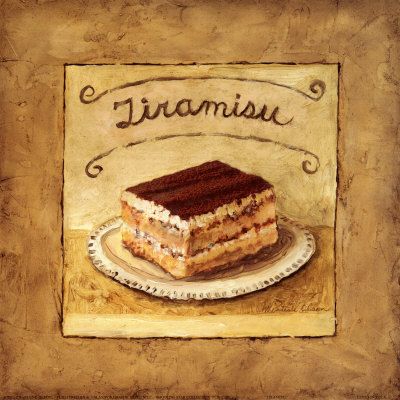
The reason I title it a regional-ish dish is because its origin story is often debated, either invented in the renown wine-region of Veneto (specifically Treviso) around 1960, or in Friuli-Venezia Giulia during the 1930s.
Nevertheless, the mysterious origins of this quasi-regional dish is a real-life example of how Italians rely heavily on orality and family memory to create and preserve much of their national recipe heritage. As Pellegrino Artusi’s infamous ‘collective cookbook‘ (1891) gave a kind of legitimacy and unified lexicon for the plethora of household recipes that existed in Italian families, with all their gloriously messy variations, perhaps the tiramisu existed in kitchens centuries before its ‘official’ discovery in the 1960s when someone decided to publish it in a book or on a menu.
And although tiramisu is fairly ‘modern’ in the ranks of Italian food legends – serving up a slightly less in-your-face type of nostalgia than, say, ‘Nonna’s Meatballs‘ – it has cemented itself as a classic dish, contributing to a cohesive idea of what ‘Italian food’ (regardless of region) is like. And it assures me that I do really like ‘Italian food,’ whatever that means.
If you want to try your hand at making tiramisu, here is a recipe from The Guardian. It is self-titled “The Perfect Tiramisu.” Big claims.
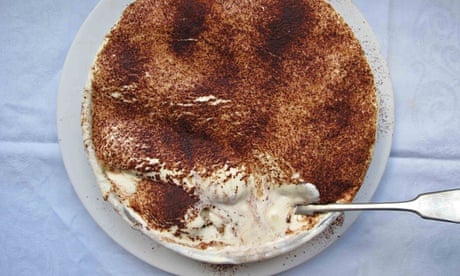
Fun fact: “Tiramisu is the fifth most recognised Italian word among non-Italian speakers, after pizza, spaghetti, espresso and mozzarella.”
 fish & bread * poisson et pain