Featured

a regional dish (French)

provençal: on Bouillabaisse

“Provençal cooking is based on garlic. The air in Provence is impregnated with the aroma of garlic, which makes it very healthful to breathe.”

— Alexandre Dumas (Grand Dictionnaire de Cuisine)

Originating from the port city of Marseilles in the Provence region, bouillabaisse (pronounced boo-yah-base) was traditionally a relatively affordable use of local produce for a humble dinner. Served hot, the main components of bouillabaisse include a saffron-tinted broth teeming with seafood (preferably the leftover parts from your fishing trip, a.k.a. the less glamorous bits that restaurants rejected), grilled bread, and a rouille garnish. Legend (or history, who knows?) says that the fishermen of Marseilles created this dish using their off-cuts, concocting a flavoursome, and basically zero-waste, stew (#sustainability).

A telltale sign of the dish’s south-of-France heritage is its heavy reliance on Provençal herbs and spices being (methodically) thrown into a pot to bring this dish to life – with a notably heavy-handed use of garlic. And if that rings too subtle, the generous handling of seafood is a pretty obvious clue too.

An iconic (exaggerated but still iconic) tribute to seafood in French cooking. Please click the picture for a musical treat.
(Les Poissons, The Little Mermaid 1989)

Thanks to the French belief in its kind of ‘culinary centralisation,’ a delicious regional dish could bet on its shiny clamshells that it would soon climb the ranks to become a ‘national’ dish of sorts. This has proven true in how you can find bouillabaisse offered in pretty much any true French restaurant, however far from Marseilles itself. With its increased popularity, the dish has also taken on more luxurious pursuits relative to its pre-19th century ‘fishmonger-scraps’ origins (bony fish remains replaced by juicy langoustine).

Ergo, there are now bouillabaisse recipes aplenty for all tastes and budgets. We love our seafood, so no complaints here:

  • This one advocates for the more traditional (albeit slightly appropriated) ‘regional’ approach in using “whatever seafood that’s around you.”
  • Or if a more straightforward, “tell me exactly what and when to chuck into a pot, and make sure I can buy everything from Coles” recipe suits you better, click here.

A cool retro fact about this dish is that in its hometown of Marseilles, the broth and garnished bread was served separately from the fish (bony Mediterranean fish). An even cooler fact is that Julia Child (yes, the original Julia chef in Julia & Julia) said it.

a regional dish-ish (Italy)

Tiramisu.
What is it?
You’ll find out.

Skip to timestamp 0:33 for tiramisu reference.

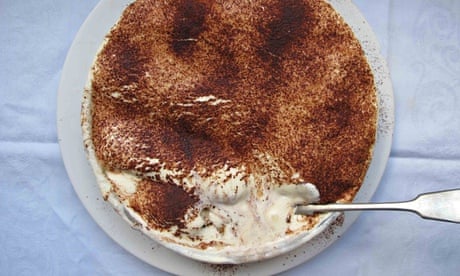
Tiramisù (pronounched tee-rah-mee-soo) means “pick me up” or “cheer me up” in Italian. And honestly, it does what it says it’ll do – at least for me, most of the time. Served cold, the main components of the dish comprise of savoiardi dipped in coffee (three cheers for caffeine!) glued together in alternating layers by a gorgeous whipped mixture of sugar, egg yolks, mascarpone cream (and sometimes cocoa). It sounds simple, but like most Italian cooking, the simplicity done well is what makes it shine. And even though I thoroughly enjoy my seafood, I would say this is a close competitor for one of my favourite European dishes of all time.

The reason I title it a regional-ish dish is because its origin story is often debated, either invented in the renown wine-region of Veneto (specifically Treviso) around 1960, or in Friuli-Venezia Giulia during the 1930s.

Nevertheless, the mysterious origins of this quasi-regional dish is a real-life example of how Italians rely heavily on orality and family memory to create and preserve much of their national recipe heritage. As Pellegrino Artusi’s infamous ‘collective cookbook‘ (1891) gave a kind of legitimacy and unified lexicon for the plethora of household recipes that existed in Italian families, with all their gloriously messy variations, perhaps the tiramisu existed in kitchens centuries before its ‘official’ discovery in the 1960s when someone decided to publish it in a book or on a menu.

And although tiramisu is fairly ‘modern’ in the ranks of Italian food legends – serving up a slightly less in-your-face type of nostalgia than, say, ‘Nonna’s Meatballs‘ – it has cemented itself as a classic dish, contributing to a cohesive idea of what ‘Italian food’ (regardless of region) is like. And it assures me that I do really like ‘Italian food,’ whatever that means.

If you want to try your hand at making tiramisu, here is a recipe from The Guardian. It is self-titled “The Perfect Tiramisu.” Big claims.

Fun fact: “Tiramisu is the fifth most recognised Italian word among non-Italian speakers, after pizza, spaghetti, espresso and mozzarella.”

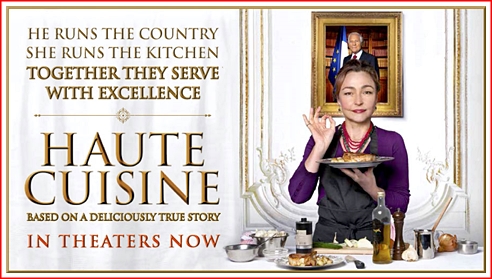
a review: Haute Cuisine

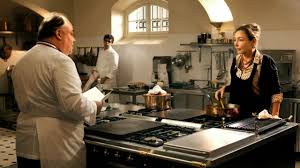
Haute Cuisine, or Les Saveurs du Palais, is a 2012 feature film based on the story of Danièle Mazet-Delpeuch‘s appointment as the first female private chef to the longest-serving President in the history of France (1981 to 1996), François Mitterrand. The plot follows Hortense Laborie (the character analogous to Mazet-Delpeuch)’s two-year tenure of the French President’s private kitchen – complete with all its triumphs, villains, tears (add drama for effect), and of course, food.

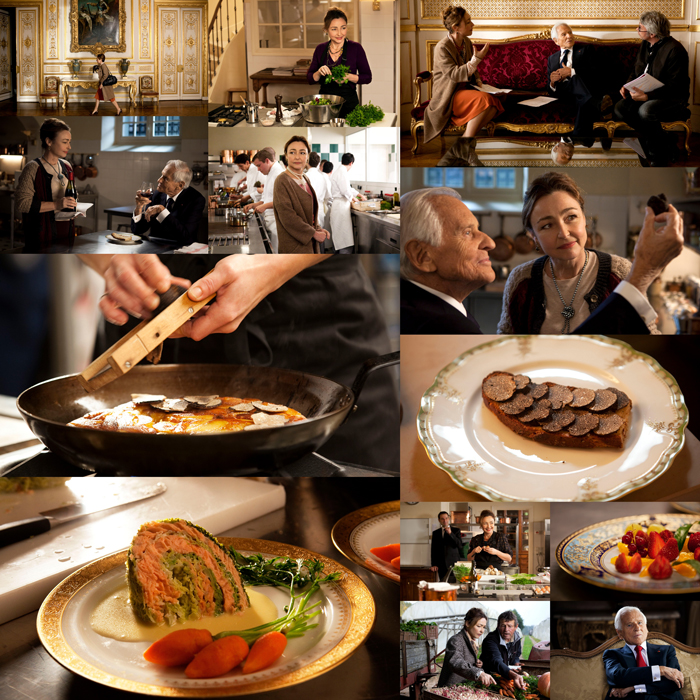
The film presents at its forefront, an exploration into the tension that exists in French cuisine. The pull towards the cutting-edge and formal against the familiar flavours of home. What is French cuisine? Is it the white-tabled 8-course degustation prepared by white-hat chefs in industrial kitchens, represented by the testosterone-dominated Main Kitchen? Or is it the laughably simple salmon-wrapped-in-cabbage and Saint Honores cake with grandmother’s cream? (Obviously though, I am biased to the salmon. Pescatarian things.) Haute Cuisine seems to suggest a certain incompatibility between the two – as seen both in the rivalry between the Main and Private Kitchens, as well as Hortense’s escape to Antarctica (the opposite end of the earth from France) following her time at Elysee. The notion of terroir is also highlighted in the regionality of Hortense’s cooking – she loves her truffles.

The film marks itself as a ‘foodie’ film simply in how it revolves itself around food. Specifically, French food. The characters in the film are all in some way associated with food, if not a bit obsessed with it (see President reciting an old French cookbook by heart). Honestly, if the dialogue bores you, just put the movie on mute and feast your eyes on the delectable visual descriptions of the dishes. Although, hearing the characters talk about food with such vigour in a language as romantic as French is almost just as satisfying. And just for that, I would recommend the movie to anyone who likes food. So, basically everyone.

a review: Bon Ap’ Petit Bistro

As part of a site-visit, I had the pleasure of visiting Bon Ap’ Petit Bistro in Fitzroy. This is a review. So, I am going to write what I thought about the food and place. Also, this post is not sponsored – I wish it was.

Brunswick Street is a hectic place. I mean, it is a long road, and there are a lot of things happening on it and around it (when you cross the road you have to look out for both trams and cars, enough said). Known for its quirky, cutting-edge cafes and vintage boutiques (also known as Melbourne-hispter-haven), most of the food joints donning the street boast either the latest vegan foodie trends or an intentionally cool exposed-brick exterior to match. And then, there is Bon Ap’ Petit Bistro.

Tucked in between two very grey-walled retailers sits this quaint triple-threat of a food node – “Cafe – Restaurant – Wine Bar” proudly etched into its banners. The smells and sounds leaking out of the wooden doors (wood – not exposed brick, ground-breaking!) transport your senses to some imagination of sipping wine and nibbling croissants just before your eyes catch a glimpse of the elegant print on the marquee – “Bon Ap’ Petit Bistro.”

Bon appetit.
It’s French.
Like, literally.

A waiter dressed in a striped blue-and-white tee-shirt (an ode to la marinière) guides you towards a cosy nook. There is an extensive shelf of wine on display. Matched only by the baked goods propped up on the bar counter just below it. Jazz vocals croon out French lyrics over the kitchen shouting out to the wait staff (in French again, of course).

The menu itself boasts a more ‘relaxed’ and ‘contemporary’ take on French dining, while maintaining its authentic, home-cooked feel. Yet, the prix fixe menu offered during the lunchtime rush hour speaks volumes about the reputation of formality (as articulated by Brillat-Savarin) held by French dining (at least in Australia) for a set-menu to be considered somewhat casual.

Nevertheless, the punch of garlic in the escargot (do snails count as seafood? please tell me yes), and the stringent yet fatty acidity of the steak tartare, all infused in some notion of warm, comforting butter, speak to a kind of French nostalgia. Even if you did not grow up with French food, or have never been to France for that matter, Bon Ap’ lives up to its promise to make you feel like French in Fitzroy. It all somehow feels a little bit like coming home.

Create your own website, free on WordPress.com.Create your own website.
Start free